
What Is the Difference Between Long-Sightedness and Short-Sightedness?
Understanding Myopia and Hyperopia
Many people experience blurred vision at some point in their lives, but not everyone understands the cause. Two of the most common vision problems are short-sightedness (myopia) and long-sightedness (hyperopia). While both are refractive errors that affect how the eyes focus light, they impact vision in different ways.
Understanding the difference between long-sightedness and short-sightedness can help you recognise symptoms early and seek the right treatment to maintain clear, comfortable vision.
What Is Short-Sightedness (Myopia)?
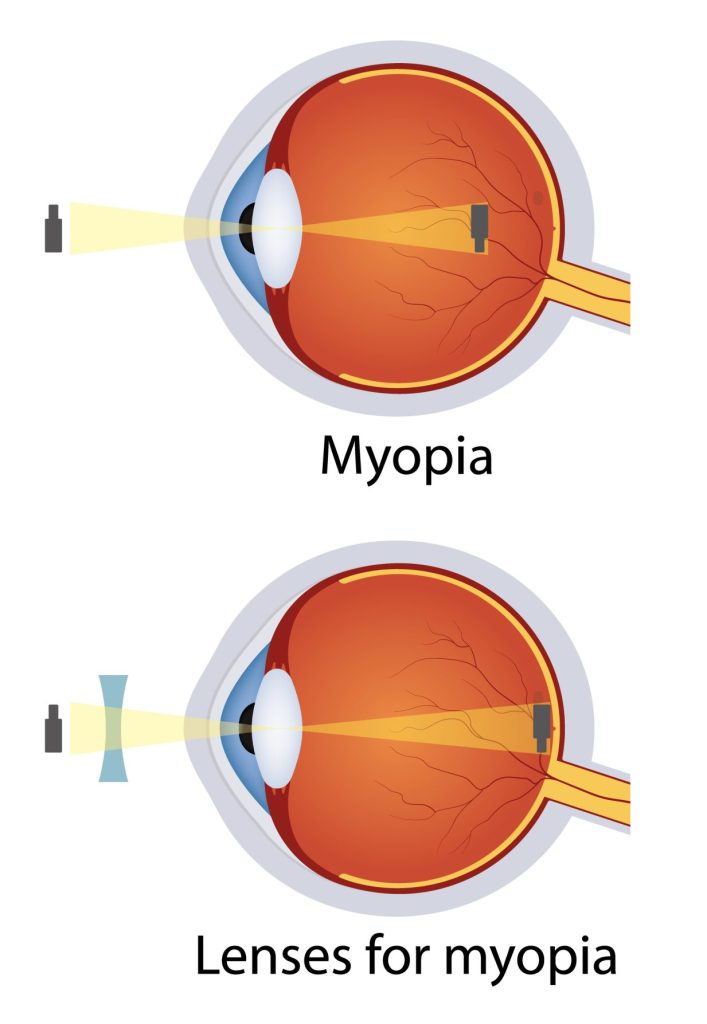
Short-sightedness, also known as myopia, is a condition where nearby objects appear clear, but distant objects look blurred.
This occurs when the eyeball is slightly longer than normal or the cornea is too curved. As a result, light entering the eye focuses in front of the retina rather than directly on it.
Common Symptoms of Myopia
- Blurred distance vision
- Difficulty reading road signs
- Squinting to see distant objects
- Headaches caused by eye strain
- Difficulty seeing clearly while driving, especially at night
Myopia often develops during childhood and can continue to progress throughout the teenage years.
What Is Long-Sightedness (Hyperopia)?
Long-sightedness, or hyperopia, affects the ability to focus on nearby objects. While distant vision may remain clear, close-up tasks such as reading, writing, or using a smartphone can become more difficult.
Hyperopia occurs when the eyeball is too short or the cornea is too flat, causing light to focus behind the retina instead of directly on it.
Common Symptoms of Hyperopia
- Blurred vision when reading or doing close work
- Eye strain after prolonged near tasks
- Frequent headaches
- Tired or aching eyes
- Difficulty focusing on small print
Some people with mild hyperopia may not notice symptoms initially, particularly when they are younger, as the eye’s natural focusing ability can compensate for the condition.

Myopia vs Hyperopia: What’s the Difference?
The main difference between myopia and hyperopia lies in which distances appear blurred.
| Short-Sightedness (Myopia) | Long-Sightedness (Hyperopia) |
|---|---|
| Nearby objects appear clear | Distant objects often appear clearer |
| Distant objects appear blurred | Close-up objects appear blurred |
| Light focuses in front of the retina | Light focuses behind the retina |
| Corrected with concave lenses | Corrected with convex lenses |
| Commonly develops in childhood | Can occur at any age |
Although the symptoms differ, both conditions can affect daily life and should be monitored through regular eye examinations.
Am I Long or Short-Sighted?
Many people notice their vision changing but aren’t sure whether they are experiencing short-sightedness (myopia) or long-sightedness (hyperopia). While the symptoms can provide clues, a professional eye test is the only way to determine the exact cause of your vision problems.
Signs You May Be Short-Sighted
You may be short-sighted if:
- Nearby objects appear clear, but distant objects are blurry
- You struggle to read road signs, television screens, or classroom boards
- You frequently squint when looking into the distance
- Driving, especially at night, has become more difficult
- You experience headaches or eye strain when trying to focus on distant objects
Short-sightedness commonly develops during childhood and can gradually worsen as children grow.
Signs You May Be Long-Sighted
You may be long-sighted if:
- Reading books, newspapers, menus, or your phone has become more difficult
- Your eyes feel tired after reading or using a computer
- You suffer from headaches after close-up tasks
- Small print appears blurry
- You find yourself holding reading material further away to see it clearly
Long-sightedness can affect both children and adults, although symptoms often become more noticeable with age.
Quick Comparison: Myopia vs Hyperopia
| Symptom | Short-Sightedness (Myopia) | Long-Sightedness (Hyperopia) |
|---|---|---|
| Blurred distance vision | ✓ | Rare |
| Blurred near vision | Rare | ✓ |
| Difficulty reading road signs | ✓ | ✗ |
| Difficulty reading books or mobile phones | ✗ | ✓ |
| Squinting to see clearly | ✓ | Sometimes |
| Eye strain and headaches | ✓ | ✓ |
Although these symptoms can help you understand whether you may be short-sighted or long-sighted, they are not a substitute for a comprehensive eye examination.
At PW Optics, our experienced optometrists can accurately assess your vision, identify any refractive errors, and recommend the most suitable glasses, contact lenses, or treatment options for your needs.
If you’ve noticed changes in your eyesight, booking an eye test is the best way to ensure your eyes remain healthy and your vision stays clear.
Book Your Eye Test Today
How Are Long-Sightedness and Short-Sightedness Diagnosed?
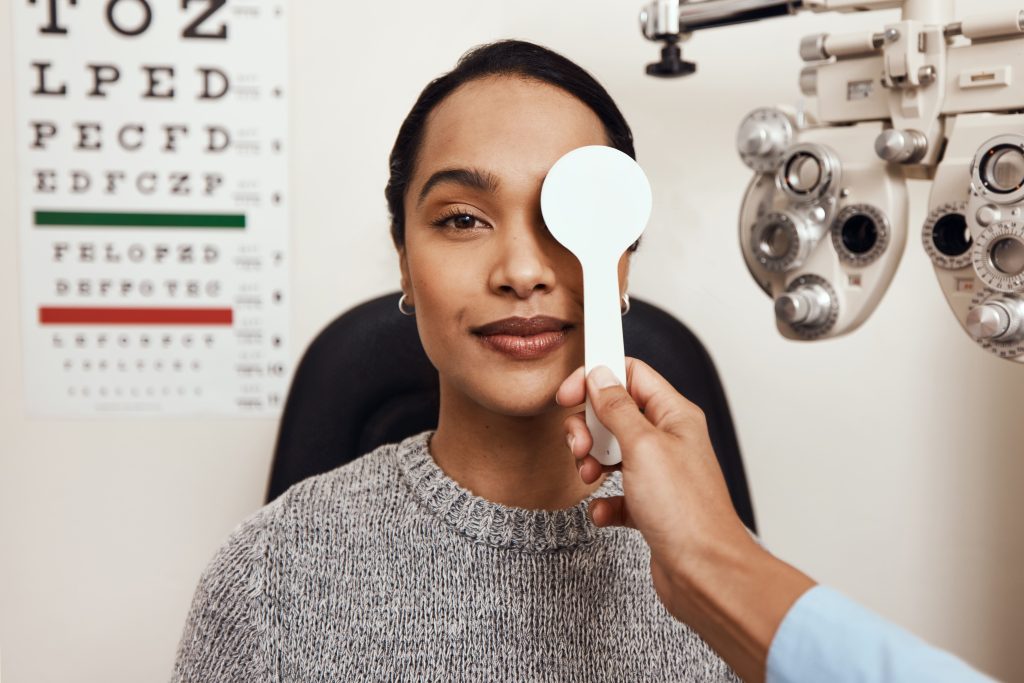
The only way to accurately diagnose a refractive error is through a comprehensive eye examination.
During an eye test, your optometrist will assess:
- Visual acuity
- Eye focusing ability
- Eye health
- Prescription requirements
- Any signs of underlying eye conditions
Regular eye tests are particularly important for children, as vision problems can impact learning, concentration, and development.
How Are These Conditions Treated?
Prescription Glasses
Glasses are one of the most effective and popular ways to correct both myopia and hyperopia. Your prescription lenses are specifically designed to help focus light correctly onto the retina.
Contact Lenses
Contact lenses offer a convenient alternative to glasses and can provide excellent vision correction for many people.
Lifestyle and Eye Care
While glasses and contact lenses correct vision, maintaining healthy visual habits can help reduce eye strain:
- Take regular breaks from screens
- Follow the 20-20-20 rule
- Ensure good lighting when reading
- Attend regular eye examinations
Refractive Surgery
Some adults may be suitable candidates for laser eye surgery or other refractive procedures, although suitability varies depending on individual circumstances.

When Should You Have an Eye Test?
Most adults should have an eye examination every two years, unless advised otherwise by their optometrist.
You should arrange an eye test sooner if you notice:
- Blurred vision
- Frequent headaches
- Difficulty reading
- Problems seeing road signs
- Increased eye strain
- Changes in your vision
Early diagnosis can help ensure the most appropriate treatment is provided and may prevent vision from deteriorating further.
Frequently Asked Questions
Is short-sightedness worse than long-sightedness?
Neither condition is inherently worse than the other. Both can significantly affect daily life if left uncorrected, but both are usually managed effectively with glasses or contact lenses.
Can you have both long-sightedness and short-sightedness?
Yes. Some people may have different prescriptions in each eye or develop age-related focusing changes alongside existing refractive errors.
Does screen time cause short-sightedness?
While screen use does not directly cause myopia, prolonged close-up work and reduced time outdoors may contribute to its development and progression.
Can children develop long-sightedness?
Yes. Many children are naturally slightly long-sighted, although significant hyperopia may require correction to support comfortable vision and learning.
Can long-sightedness and short-sightedness be cured?
There is currently no cure for refractive errors, but glasses, contact lenses, and some surgical procedures can effectively correct vision.
Book an Eye Test at PW Optics
Whether you’re struggling to see objects in the distance or finding it difficult to focus on close-up tasks, a professional eye examination can identify the cause and help you achieve clearer vision.
At PW Optics, our experienced optometrists provide comprehensive eye tests and personalised advice to ensure your eyes remain healthy and your vision stays at its best.
Contact us today to book your eye test and find the right solution for your vision needs.
Understanding Myopia and Hyperopia
Many people experience blurred vision at some point in their lives, but not everyone understands the cause. Two of the most common vision problems are short-sightedness (myopia) and long-sightedness (hyperopia). While both are refractive errors that affect how the eyes focus light, they impact vision in different ways.
Understanding the difference between long-sightedness and short-sightedness can help you recognise symptoms early and seek the right treatment to maintain clear, comfortable vision.
What Is Short-Sightedness (Myopia)?
Short-sightedness, also known as myopia, is a condition where nearby objects appear clear, but distant objects look blurred.
This occurs when the eyeball is slightly longer than normal or the cornea is too curved. As a result, light entering the eye focuses in front of the retina rather than directly on it.
Common Symptoms of Myopia
- Blurred distance vision
- Difficulty reading road signs
- Squinting to see distant objects
- Headaches caused by eye strain
- Difficulty seeing clearly while driving, especially at night
Myopia often develops during childhood and can continue to progress throughout the teenage years.
What Is Long-Sightedness (Hyperopia)?
Long-sightedness, or hyperopia, affects the ability to focus on nearby objects. While distant vision may remain clear, close-up tasks such as reading, writing, or using a smartphone can become more difficult.
Hyperopia occurs when the eyeball is too short or the cornea is too flat, causing light to focus behind the retina instead of directly on it.
Common Symptoms of Hyperopia
- Blurred vision when reading or doing close work
- Eye strain after prolonged near tasks
- Frequent headaches
- Tired or aching eyes
- Difficulty focusing on small print
Some people with mild hyperopia may not notice symptoms initially, particularly when they are younger, as the eye’s natural focusing ability can compensate for the condition.
Myopia vs Hyperopia: What’s the Difference?
The main difference between myopia and hyperopia lies in which distances appear blurred.
| Short-Sightedness (Myopia) | Long-Sightedness (Hyperopia) |
|---|---|
| Nearby objects appear clear | Distant objects often appear clearer |
| Distant objects appear blurred | Close-up objects appear blurred |
| Light focuses in front of the retina | Light focuses behind the retina |
| Corrected with concave lenses | Corrected with convex lenses |
| Commonly develops in childhood | Can occur at any age |
Although the symptoms differ, both conditions can affect daily life and should be monitored through regular eye examinations.
Am I Short-Sighted or Long-Sighted?
Many people notice their vision changing but aren’t sure whether they are experiencing short-sightedness (myopia) or long-sightedness (hyperopia). While the symptoms can provide clues, a professional eye test is the only way to determine the exact cause of your vision problems.
Signs You May Be Short-Sighted
You may be short-sighted if:
- Nearby objects appear clear, but distant objects are blurry
- You struggle to read road signs, television screens, or classroom boards
- You frequently squint when looking into the distance
- Driving, especially at night, has become more difficult
- You experience headaches or eye strain when trying to focus on distant objects
Short-sightedness commonly develops during childhood and can gradually worsen as children grow.
Signs You May Be Long-Sighted
You may be long-sighted if:
- Reading books, newspapers, menus, or your phone has become more difficult
- Your eyes feel tired after reading or using a computer
- You suffer from headaches after close-up tasks
- Small print appears blurry
- You find yourself holding reading material further away to see it clearly
Long-sightedness can affect both children and adults, although symptoms often become more noticeable with age.
Quick Comparison: Myopia vs Hyperopia
| Symptom | Short-Sightedness (Myopia) | Long-Sightedness (Hyperopia) |
|---|---|---|
| Blurred distance vision | ✓ | Rare |
| Blurred near vision | Rare | ✓ |
| Difficulty reading road signs | ✓ | ✗ |
| Difficulty reading books or mobile phones | ✗ | ✓ |
| Squinting to see clearly | ✓ | Sometimes |
| Eye strain and headaches | ✓ | ✓ |
The Best Way to Find Out
Although these symptoms can help you understand whether you may be short-sighted or long-sighted, they are not a substitute for a comprehensive eye examination.
At PW Optics, our experienced optometrists can accurately assess your vision, identify any refractive errors, and recommend the most suitable glasses, contact lenses, or treatment options for your needs.
If you’ve noticed changes in your eyesight, booking an eye test is the best way to ensure your eyes remain healthy and your vision stays clear.
Book Your Eye Test Today
How Are Long-Sightedness and Short-Sightedness Diagnosed?
The only way to accurately diagnose a refractive error is through a comprehensive eye examination.
During an eye test, your optometrist will assess:
- Visual acuity
- Eye focusing ability
- Eye health
- Prescription requirements
- Any signs of underlying eye conditions
Regular eye tests are particularly important for children, as vision problems can impact learning, concentration, and development.
How Are These Conditions Treated?
Prescription Glasses
Glasses are one of the most effective and popular ways to correct both myopia and hyperopia. Your prescription lenses are specifically designed to help focus light correctly onto the retina.
Contact Lenses
Contact lenses offer a convenient alternative to glasses and can provide excellent vision correction for many people.
Lifestyle and Eye Care
While glasses and contact lenses correct vision, maintaining healthy visual habits can help reduce eye strain:
- Take regular breaks from screens
- Follow the 20-20-20 rule
- Ensure good lighting when reading
- Attend regular eye examinations
Refractive Surgery
Some adults may be suitable candidates for laser eye surgery or other refractive procedures, although suitability varies depending on individual circumstances.
When Should You Have an Eye Test?
Most adults should have an eye examination every two years, unless advised otherwise by their optometrist.
You should arrange an eye test sooner if you notice:
- Blurred vision
- Frequent headaches
- Difficulty reading
- Problems seeing road signs
- Increased eye strain
- Changes in your vision
Early diagnosis can help ensure the most appropriate treatment is provided and may prevent vision from deteriorating further.
Frequently Asked Questions
Is short-sightedness worse than long-sightedness?
Neither condition is inherently worse than the other. Both can significantly affect daily life if left uncorrected, but both are usually managed effectively with glasses or contact lenses.
Can you have both long-sightedness and short-sightedness?
Yes. Some people may have different prescriptions in each eye or develop age-related focusing changes alongside existing refractive errors.
Does screen time cause short-sightedness?
While screen use does not directly cause myopia, prolonged close-up work and reduced time outdoors may contribute to its development and progression.
Can children develop long-sightedness?
Yes. Many children are naturally slightly long-sighted, although significant hyperopia may require correction to support comfortable vision and learning.
Can long-sightedness and short-sightedness be cured?
There is currently no cure for refractive errors, but glasses, contact lenses, and some surgical procedures can effectively correct vision.
Book an Eye Test at PW Optics
Whether you’re struggling to see objects in the distance or finding it difficult to focus on close-up tasks, a professional eye examination can identify the cause and help you achieve clearer vision.
At PW Optics, our experienced optometrists provide comprehensive eye tests and personalised advice to ensure your eyes remain healthy and your vision stays at its best.
Contact us today to book your eye test and find the right solution for your vision needs.