
Dry Eyes & Dry Eye Syndrome
Eyecare
When the eyes aren’t producing enough tears, or the quality of the tears is compromised the tears evaporate from the ocular surface faster than normal causing dry eye. When the surface dries out too quickly the eye can become inflamed and red.
There are two main causes of dry eye. If dry eye is the result of a lack of tear production it is referred to as Aqueous Deficiency.
If the cause of the dry eye is the result of poor tear quality due to a blockage of the meibomian gland it is referred to as Blepharitis.
Book an Eye Test Today
Who can get Dry Eye?
Dry eye is most prevalent in people over the age of 60 and is more common in women than in men. It can however occur at any age.
What are the symptoms of Dry Eye?
There is a wide range of symptoms for dry eye, ranging from slight irritation to severe discomfort.
Symptoms can include:
- Foreign body feeling/feels like something is in the eyes
- ‘gritty’ eyes – often worse in the mornings
- Blurred vision
- Burning sensation in eyes
- Eyelids are irritated
- Light sensitivity
- Red eyes
- Painful eyes
- Excessive watering
My eyes are watering all the time, how can they be dry?
Whilst it may seem like a contradiction, eyes that water excessively can be a sign of dry eye. Every time we blink the tear film is spread across the ocular surface. When there are not enough tears or they are of poor quality they evaporate faster than normal leaving the eye dry. Receptors on the eye’s surface are stimulated by the inflammation the dryness causes, triggering the eye to produce more tears to combat it. This usually results in the production of extremely watery tears and therefore watery eyes.
What causes Dry Eye?
The causes of dryness include:
- Ageing – a lot of people over 60 suffer from dry eye.
- Hot, dry or windy climates – these conditions can cause tears to evaporate more quickly.
- Inflammatory diseases – e.g. Rheumatoid arthritis is associated with a higher risk of dry eyes.
- Medications – some medications can cause dry eye as a side effect e.g. The oral contraceptive pill.
Does Dry Eye cause loss of vision?
For the vast majority of cases, the dry eye won’t cause any changes to the vision. In very severe cases if the eye desiccates it can cause the cornea to scar which may reduce the vision.
How is Dry Eye Syndrome treated?
As yet, there is not a complete cure for dry eye, instead, there are several treatments that can provide relief from the symptoms.
Lid Margin Hygiene
If Blepharitis is the cause of dry eye, then following a regime of hot compresses to treat the Blepharitis will help to alleviate the symptoms of dry eye.
Lubricants
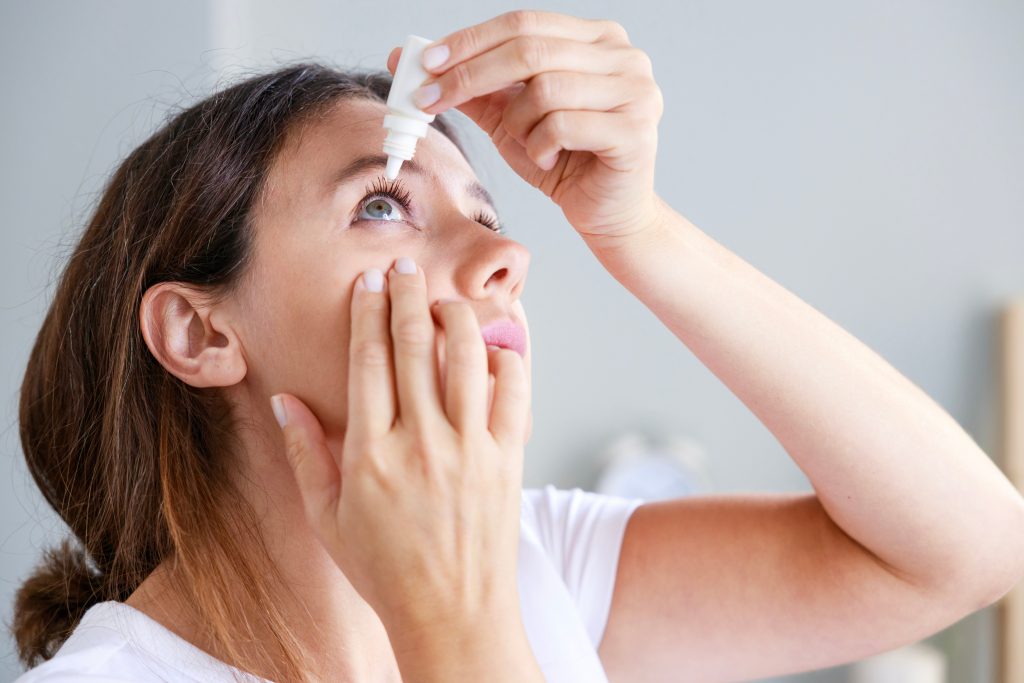
The surface of the eye can be kept wet with the use of lubricating dry eye drops or gels. This will help to slow the evaporation of the tear film.
Tear Duct Surgery
If a drop in tear production cause severe dry eye the tear ducts can be blocked to slow the drainage of tears. This allows the tears that are produced to stay on the ocular surface for longer. Temporary plugs are normally used first, if the dry eye is severe enough the tear ducts may be permanently closed with surgical cautery.
20-20-20 Rule
When concentrating for extended periods (e.g. computer work) our blink rate reduces resulting in tear evaporation. The 20-20-20 rule can help to combat this. Every 20 minutes look at a distance of 20 feet for 20 seconds. This allows the eye to restore the tear film layer and prevent dry eye.
As part of our eye examinations, we will do a full check of your eye health, book your appointment today.
When the eyes aren’t producing enough tears, or the quality of the tears is compromised the tears evaporate from the ocular surface faster than normal causing dry eye. When the surface dries out too quickly the eye can become inflamed and red.
There are two main causes of dry eye. If dry eye is the result of a lack of tear production it is referred to as Aqueous Deficiency.
If the cause of the dry eye is the result of poor tear quality due to a blockage of the meibomian gland it is referred to as Blepharitis.
Book an Eye Test Today
Who can get Dry Eye?
Dry eye is most prevalent in people over the age of 60 and is more common in women than in men. It can however occur at any age.
What are the symptoms of Dry Eye?
There is a wide range of symptoms for dry eye, ranging from slight irritation to severe discomfort.
Symptoms can include:
- Foreign body feeling/feels like something is in the eyes
- ‘gritty’ eyes – often worse in the mornings
- Blurred vision
- Burning sensation in eyes
- Eyelids are irritated
- Light sensitivity
- Red eyes
- Painful eyes
- Excessive watering
My eyes are watering all the time, how can they be dry?
Whilst it may seem like a contradiction, eyes that water excessively can be a sign of dry eye. Every time we blink the tear film is spread across the ocular surface. When there are not enough tears or they are of poor quality they evaporate faster than normal leaving the eye dry. Receptors on the eye’s surface are stimulated by the inflammation the dryness causes, triggering the eye to produce more tears to combat it. This usually results in the production of extremely watery tears and therefore watery eyes.
What causes Dry Eye?
The causes of dryness include:
- Ageing – a lot of people over 60 suffer from dry eye.
- Hot, dry or windy climates – these conditions can cause tears to evaporate more quickly.
- Inflammatory diseases – e.g. Rheumatoid arthritis is associated with a higher risk of dry eyes.
- Medications – some medications can cause dry eye as a side effect e.g. The oral contraceptive pill.
Does Dry Eye cause loss of vision?
For the vast majority of cases, the dry eye won’t cause any changes to the vision. In very severe cases if the eye desiccates it can cause the cornea to scar which may reduce the vision.
How is Dry Eye Syndrome treated?
As yet, there is not a complete cure for dry eye, instead, there are several treatments that can provide relief from the symptoms.
Lid Margin Hygiene
If Blepharitis is the cause of dry eye, then following a regime of hot compresses to treat the Blepharitis will help to alleviate the symptoms of dry eye.
Lubricants
The surface of the eye can be kept wet with the use of lubricating dry eye drops or gels. This will help to slow the evaporation of the tear film.
Tear Duct Surgery
If a drop in tear production cause severe dry eye the tear ducts can be blocked to slow the drainage of tears. This allows the tears that are produced to stay on the ocular surface for longer. Temporary plugs are normally used first, if the dry eye is severe enough the tear ducts may be permanently closed with surgical cautery.
20-20-20 Rule
When concentrating for extended periods (e.g. computer work) our blink rate reduces resulting in tear evaporation. The 20-20-20 rule can help to combat this. Every 20 minutes look at a distance of 20 feet for 20 seconds. This allows the eye to restore the tear film layer and prevent dry eye.
As part of our eye examinations, we will do a full check of your eye health, book your appointment today.